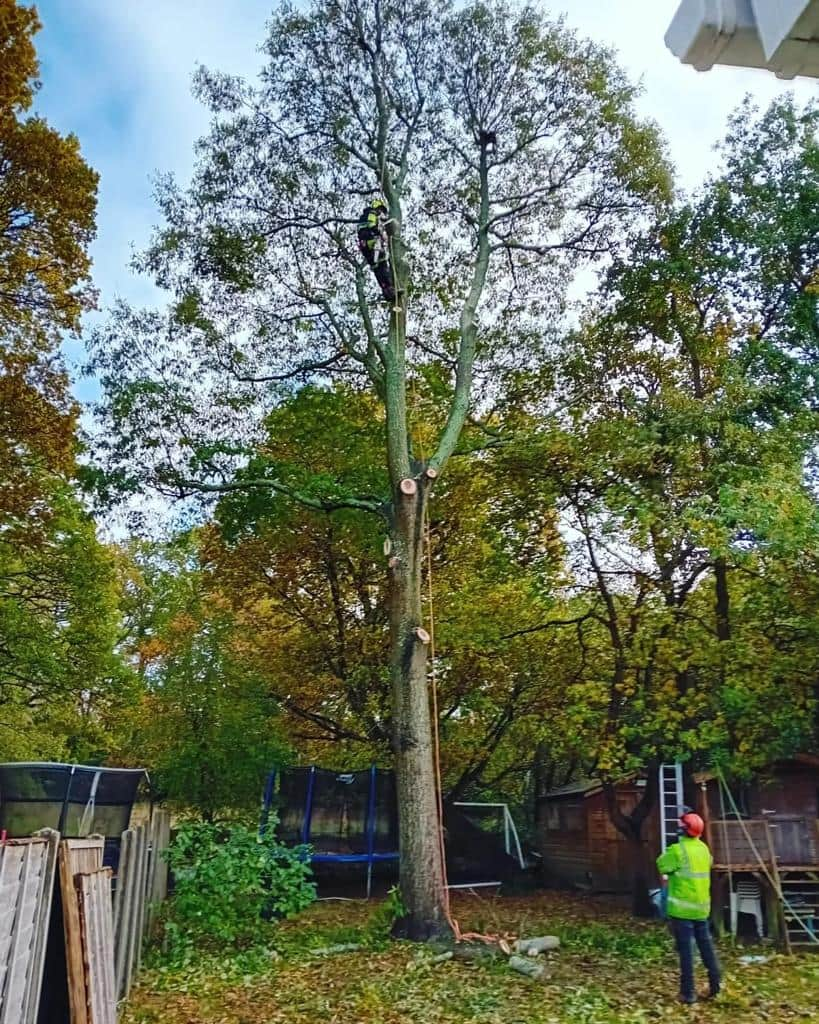
Tree surgery involves far more than cutting branches or removing unwanted growth. Every tree has a different structure, condition and relationship with its surroundings. Work may need to be carried out at height, above buildings or within a restricted garden, making careful planning essential.
Using the correct equipment is only one part of the process. The person operating it must also understand tree biology, branch loading, cutting techniques and controlled removal. For property owners in Roydon, Essex, professional tree surgery provides a considered approach that protects the tree, the surrounding area and everyone nearby.
Why Professional Tree Surgery Depends on Equipment and Expertise
The equipment required varies according to the tree, the work being completed and the available access. Pruning a small tree from ground level presents different challenges from dismantling a mature tree beside a building. An experienced tree surgeon assesses these factors before deciding how the work should proceed.
Every Tree Requires an Individual Assessment
Before cutting begins, the tree’s species, size, health and structure should be examined. Cracks, cavities, decay, dead branches and weak attachment points can influence how the tree responds during the work.
The surrounding area also matters. Nearby roofs, fences, sheds, paths and planting may affect access and determine whether branches can be lowered freely or require controlled rigging.
Climbing Equipment Must Be Used Correctly
Tree surgeons may use ropes, harnesses and specialist climbing systems to move safely within a canopy. This equipment allows them to reach selected branches while maintaining stable working positions.
Correct setup is vital. Anchor points must be chosen carefully, climbing lines need to follow suitable routes and equipment must be appropriate for the tree’s structure. Experience enables the climber to move efficiently without placing unnecessary stress on weak sections.
Cutting Equipment Must Match the Task
Professional tree surgery can involve hand saws, pole saws and chainsaws of different sizes. The appropriate tool depends on the diameter, position and condition of the branch being removed.
A tool that is too large can make precise pruning difficult, while unsuitable equipment may produce poor cuts or damage nearby growth. Skilled operators understand how to select and control each tool for the task.
Pruning Cuts Affect Future Growth
Where and how a branch is cut influences the tree’s ability to respond. Correct pruning should retain the branch collar and avoid unnecessary injury to the trunk or parent limb.
Poorly positioned cuts can leave large wounds, encourage weak regrowth or damage tissues involved in the tree’s natural response to injury. Knowledge of tree structure helps ensure that pruning achieves its purpose without removing more material than necessary.
Branches Can Behave Unpredictably Under Tension
Branches do not always move in the direction expected once cutting begins. Their weight, angle, internal tension and contact with neighbouring limbs can affect how they split, swing or fall.
Experienced tree surgeons assess these forces before making a cut. They may remove a branch in smaller sections or use ropes to control its movement, particularly when working near buildings and garden features.
Rigging Equipment Enables Controlled Removal
When branches cannot be allowed to fall freely, ropes, pulleys and lowering devices can be used to guide them safely to the ground. This technique is often required in confined outdoor spaces.
Rigging places considerable forces on the tree and equipment. The team must understand loading, anchor selection and communication so that each section is lowered in a controlled manner.
Larger Trees May Require Sectional Dismantling
Where there is insufficient space to fell a tree in one piece, it may need to be dismantled gradually. Branches are removed in a planned sequence before the trunk is reduced in sections.
The order of work is important because each removal changes the tree’s balance and the climber’s available working positions. Experience helps the team maintain control from the upper canopy through to the final trunk sections.
Access Equipment Can Improve Efficiency
Some trees are better approached with a mobile elevated work platform rather than by climbing. This may be appropriate when the tree is unstable, has limited climbing anchors or requires access to a particular part of the canopy.
Ground protection and safe positioning must be considered before bringing machinery onto the site. The choice of access method should follow the tree assessment rather than being based on convenience alone.
Stump Grinding Requires Specialist Machinery
After felling, the remaining stump may obstruct a lawn, path or planned landscaping area. A stump grinder uses a rotating cutting wheel to reduce the stump below the surrounding surface.
The operator must account for the stump’s size, root flare, accessibility and nearby features. Careful machine control is needed to achieve the required depth while limiting disturbance to the rest of the garden.
Wood Chippers Help Manage Branch Waste
Pruning and felling can produce a substantial volume of branches. A wood chipper processes suitable material into smaller pieces, making the site easier to clear and manage.
Safe feeding techniques and a well-organised work area are essential. Ground staff play an important role by preparing branches, maintaining clear access routes and communicating with the rest of the team.
Teamwork Is Essential During Tree Surgery
Professional tree work is rarely completed by one person alone. Climbers and ground staff need clear communication throughout cutting, rigging and lowering operations.
Each team member must understand the sequence of work and remain aware of changing conditions. Good coordination helps prevent confusion and ensures that branches, machinery and debris are managed methodically.
Experience Helps Protect the Tree
Not every tree needs extensive pruning, and removing too much foliage can cause unnecessary stress. An experienced tree surgeon can distinguish between growth that genuinely requires attention and branches that should remain.
The aim may be crown reduction, crown lifting, deadwood removal or selective pruning. Choosing the correct technique helps achieve the required clearance or balance while preserving the tree’s natural form.
Planning Protects the Surrounding Property
Before work begins, the team should identify potential drop zones, access routes and vulnerable garden features. Smaller plants, surfaces and structures may need temporary protection.
Planning also determines where equipment and cut material will be placed. A well-organised site allows the work to proceed efficiently and reduces avoidable disturbance.
Conclusion
Tree surgery requires suitable equipment because the work involves height, heavy branches, mechanical tools and changing loads. It also requires experience to assess the tree correctly, choose appropriate cuts and control each stage of the operation.
If a tree at your property in Roydon, Essex, needs professional attention, Roydon Tree Surgeons can assess its condition and recommend an appropriate form of tree surgery. Contact us to arrange an inspection and receive practical guidance based on the tree and its surroundings.
Call us on: 01279 744 797
Click here to find out more about Roydon Tree Surgeons
Click here to complete our contact form and see how we can help with your tree care needs.